Posts

Pandemic now, Plague of the past...
Image
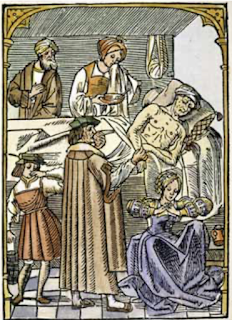
     In the past, there has been countless times through history that we hear about numerous people dying or being affected by viruses/diseases.  Many people were isolated and lacked domesticating animals that meant the absence of acquired immunities to diseases like smallpox, measles, typhus, influenza, malaria, yellow fever, etc.  One was "The Great Dying"(pg 557), when people of Europe arrived to America, there was a smallpox pandemic brought over through the travel by sea that caused so many people to die from the plague plus hunger.  "The Little Ice Age", it was a period of unusual cool temperatures that happened during the early modern period with the peak in the mid-seventeeth century more specifically hitting China, Europe, and North America.  While those in tropical areas experienced extreme heat causing societies and civilizations to go through a tough time of drought, widespread famine, and epidemics that caused many people to die.  Alt...

Why do we celebrate the 4th of July in America?

Image
    July 4th is the day celebrated by Americans as its Independence Day or almost as its "birth day", but it isn't about the fireworks, BBQs, or showing off the red, white, and blue colors that we have been accustom to throughout the years.  This historic day was about being independent form Great Britain as the colonies of America formed a committee creating the Declaration of Independence to cut ties from the Britains.  It is often portrayed and talked about that it only depicted white men in wigs but this also consisted of Native Americans, African Americans and women that played a key role especially during the American Revolution.  The Boston Tea Party was a significant protest that involved dumping the English Tea into the waters because of taxes from the British government.  The famous Paul Revere warned people that the British were coming on a horse.  Women played an important role as nurses and some even military missions.  For examp...

RESPONDING to Tony O's #9 Question

Image
Tony Orpeza's Question & Answer 9.  The image I chose to write about is the one depicting Britain's enormous amount of greed on page 790. I think Strayer chose this particular cartoon because of the volumes of truth it actually speaks. At a time where the world could have been created in a peaceful, equal manner, a country like Britain did everything they absolutely could to extend their power and reach among other civilizations. An example is Britain being defeated in the American Revolution only to go back and try to start an opium war with China. The hand above Egypt, shows me that Britain indeed was plotting a scheme to get a piece of Egypt along with the other countries it has its hands on. I personally do not like this image, but I felt like I could relate to it. Today in America it seems that we owe so many countries so much money. This picture for some reason reminded me of today. The difference is that global bankers and elite families with mass amounts of money ar...

Ch. 16, 17, 18: Western Expansion & Globalization

Image
1) What was The Great Dying? Cite examples and details from the historical record in your response. Could this be considered a genocide? Why/ why not? The Great Dying was in the Americas where it was a natural phenomenon also known as "the Little Ice Age" which the period of unusual cold temperature spread mostly in the Northern hemisphere.  Scholars debate the causes suggesting: "a low point in sunspot activity, leading to less intense solar irradiation of the earth"; "chief cause was volcanic eruptions, whose ash and gases blocked the sun's warming energy in the upper atmosphere"; scientist also link it to the "demographic collapse in the Americas" which is the Native Americans deserting their farmland and traditional practices of forest management that caused a revival of plant life to take in large amounts of carbon dioxide and green house gas which got into the atmosphere and resulted in a global cooling.  This is a tough consideration o...

CH 15: Birth of Modern Science

Image
What can Galileo's discoveries with his telescope and his conviction by the Inquisition tell us about the Scientific Revolution?         The brilliant Italian mathematician and astronomer Galileo Galilei unlocked the potential of the telescope to observe the night sky.  Throughout history, there has always been a conflict between religion and science.  Galileo made discoveries trying to understand the cosmos using his telescope.  His findings were even til this day incredible, but was simply misunderstood.  The advancements of science seemed to be at a stand still or pushed back whenever it was being connected or related to religion.  His empirical evidence transformed the debate over the nature of the cosmos which compared to Copernicus' advanced theory of the solar system.  Galileo had constant critics and warnings especially from the Church about his publications in regards to his new found knowledge.  I feel that the Inquis...

Ch 14: Asian commerce

Image
What drove European involvement in the world of Asian commerce?    One of the main reasons was the desire and popularity of tropical spices.  These spices were sought after not just to use as condiments and preservatives but were also known to be aphrodisiacs.  The other products of the Chinese innovative technology such as paper, the compass, gunpowder, and silk were becoming world renown.  There were also treasure seekers looking for emeralds, rubies, and sapphires which were in high demand in exchange for other popular goods like fur, silver, and gold.  It seems as if Asia had so much "exotic" things that many people needed to have or wanted to own these commodities.  But it also gave Europeans to expand territory, exploration of new or unknown lands, trade, and even conquer or control people especially to put their beliefs into the natives of the lands they visited.   A topic that resonated with me was when Spain established themselves in the ...

CH 13: Chinese Empire

Image
What were the distinctive features of Chinese empire building in the early modern era?     In the modern era, China was expanding its territorial size of the country and started to reach even those of non-Chinese people.  The Manchu, or China's Qing dynasty, conquered China as outsiders becoming a foreign dynasty but continued massive projects of imperial expansion (1644-1912) and contain the cultural traditions of the Chinese like Confucian teachings, Chinese language, and Chinese bureaucratic techniques to govern the growing empire.   The Chinese reached regions known as Tibet, Mongolia, Xinjiang, and central Asia to trade or even conducted battle/wars in order to take control using military might then instill the Chinese ways.  This new Chinese imperial state was growing and was still a masculine society which is upsetting.  Its disappointing to know that the Qing rulers were very firm with the Confucian gender roles favoring the men as women were s...